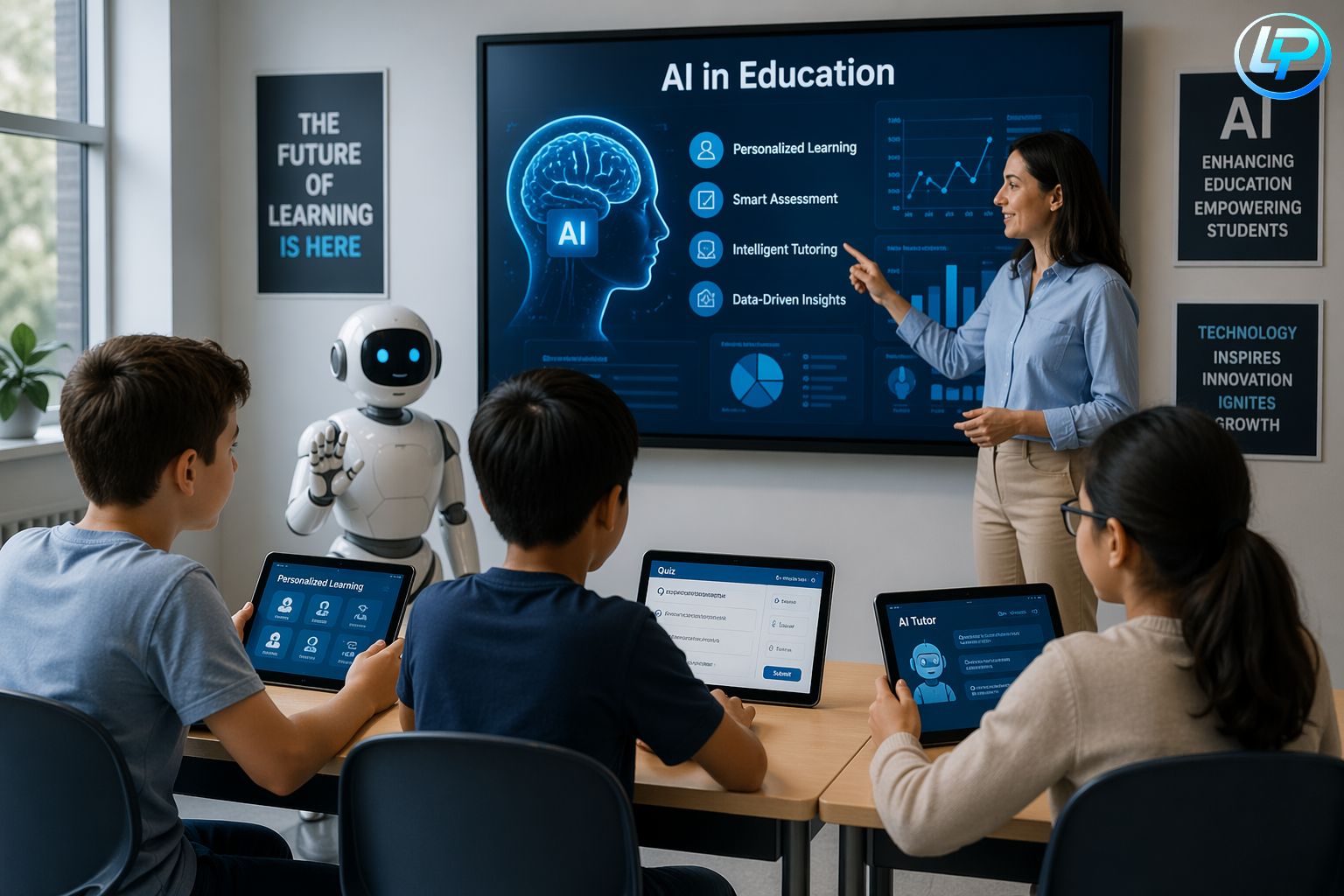
Artificial Intelligence (AI) is no longer a futuristic concept—it is already shaping the way we live, work, and learn. One of the most exciting areas where AI is making a powerful impact is education. From personalized learning to smart classrooms, the use of AI is revolutionizing traditional teaching methods. In this article, we will explore AI in education example scenarios, understand how it benefits students and teachers, and see how brands like lynxperio are contributing to this transformation.
What is AI in Education?
AI in education refers to the use of intelligent machines and algorithms to enhance learning experiences. These systems can analyze data, adapt to student needs, and automate tasks that traditionally required human effort.
When we talk about an AI in education example, we are referring to real-life applications such as virtual tutors, automated grading systems, or AI-powered learning platforms.
Companies like lynxperio are focusing on integrating smart technologies into educational ecosystems, making learning more efficient, engaging, and accessible.
Why AI is Important in Education
Before diving into specific examples, it’s important to understand why AI matters in education:
- It personalizes learning for each student
- It saves time for teachers by automating repetitive tasks
- It improves student engagement
- It provides real-time feedback
- It makes education accessible worldwide
With innovation driven by platforms like lynxperio, education is becoming more student-centered than ever before.
Top AI in Education Example Scenarios
Let’s explore some practical and real-world AI in education example use cases:
1. Personalized Learning Systems
One of the best examples of AI in education is personalized learning. AI systems analyze student performance and create customized learning paths.
Example:
Platforms like adaptive learning apps track how a student answers questions and adjust difficulty levels accordingly.
Impact:
- Students learn at their own pace
- Weak areas are identified quickly
- Learning becomes more effective
Companies such as lynxperio are working toward building intelligent systems that tailor education based on individual needs.
2. AI-Powered Virtual Tutors
Virtual tutors are another strong AI in education example. These AI systems provide assistance to students anytime, anywhere.
Example:
Chatbots or AI tutors that answer questions instantly and explain concepts step-by-step.
Impact:
- 24/7 learning support
- Reduced dependency on human tutors
- Instant doubt resolution
With innovations from lynxperio, virtual tutoring is becoming smarter and more human-like.
3. Automated Grading Systems
Grading assignments is time-consuming for teachers. AI simplifies this process.
Example:
AI tools can automatically grade multiple-choice questions, essays, and even coding assignments.
Impact:
- Saves teacher time
- Reduces human bias
- Provides quick feedback
This is a perfect AI in education example showing how automation improves efficiency in schools.
4. Smart Content Creation
AI can generate digital content such as summaries, quizzes, and study materials.
Example:
AI tools that convert textbooks into interactive lessons or create practice tests.
Impact:
- Enhances learning experience
- Makes content more engaging
- Helps students revise effectively
Platforms like lynxperio are exploring content automation to make education more dynamic.
5. AI in Language Learning
Language learning has been transformed with AI-powered tools.
Example:
Apps that use speech recognition to improve pronunciation and grammar.
Impact:
- Real-time correction
- Better speaking skills
- Interactive learning
This is another practical AI in education example showing how technology improves communication skills.
6. Predictive Analytics in Education
AI can predict student performance and identify those at risk of falling behind.
Example:
Systems that analyze attendance, test scores, and behavior patterns.
Impact:
- Early intervention
- Improved student success rates
- Better academic planning
Organizations like lynxperio are leveraging data analytics to enhance student outcomes.
7. Smart Classrooms
Smart classrooms use AI-powered devices to create an interactive environment.
Example:
AI-based cameras, voice assistants, and smart boards.
Impact:
- Interactive teaching
- Better student engagement
- Enhanced collaboration
This modern AI in education example highlights how classrooms are evolving with technology.
Benefits of AI in Education
The use of AI in education offers numerous advantages:
1. Better Learning Experience
Students receive personalized attention and customized lessons.
2. Time Efficiency
Teachers can focus more on teaching rather than administrative work.
3. Accessibility
AI makes education available to remote and underserved areas.
4. Data-Driven Decisions
Schools can make informed decisions based on analytics.
Brands like lynxperio are playing a crucial role in bringing these benefits to life.
Challenges of AI in Education
While AI has many advantages, it also comes with challenges:
- Data privacy concerns
- High implementation costs
- Lack of technical knowledge
- Dependence on technology
However, with responsible innovation from companies like lynxperio, these challenges can be addressed effectively.
Future of AI in Education
The future of AI in education looks incredibly promising. We can expect:
- Fully personalized learning environments
- AI teachers assisting human educators
- Virtual reality classrooms
- Smarter education systems
The continuous development by brands such as lynxperio will play a key role in shaping this future.
Conclusion
AI is transforming education in ways we never imagined. From personalized learning to smart classrooms, every AI in education example shows how technology is improving the learning experience.
As innovation continues, companies like lynxperio are helping bridge the gap between traditional education and modern technology. The integration of AI is not just a trend—it is the future of education.
By embracing AI, we can create a smarter, more inclusive, and more effective education system for generations to come.

While AI’s benefits in education are clear, I wonder about the long-term implications for student-teacher relationships. Can AI truly replace the mentorship and emotional support teachers offer, or will it complement their role?
The breakdown of AI’s role in personalized learning and predictive analytics really highlights how transformative these tools can be for both students and educators. It’s fascinating to see how AI isn’t just about automation, but about creating more inclusive and adaptive learning environments. Thanks for sharing such a well-rounded perspective on the current applications and future potential.
The insight into how predictive analytics can proactively address learning gaps is particularly compelling given this article. It effectively highlights the shift from reactive teaching to data-driven personalization, making the potential for smarter classrooms feel very tangible. This discussion on balancing efficiency with accessibility is exactly what the future of education needs.
The section on personalized learning systems really hits home, as shifting away from one-size-fits-all instruction is exactly what education has needed for years. It is fascinating how these AI tools don’t just automate grading but actually provide real-time insights to help teachers adapt their strategies for each student. This data-driven approach clearly bridges the gap between traditional teaching methods and the dynamic needs of modern learners.
It’s fascinating to see how predictive analytics and smart content creation are shifting education from a one-size-fits-all model to truly personalized learning experiences. The emphasis on time efficiency for teachers through automated grading seems like a game-changer that will allow them to focus more on mentorship. It’s clear that the future of learning hinges on this seamless integration of data-driven insights and human connection.