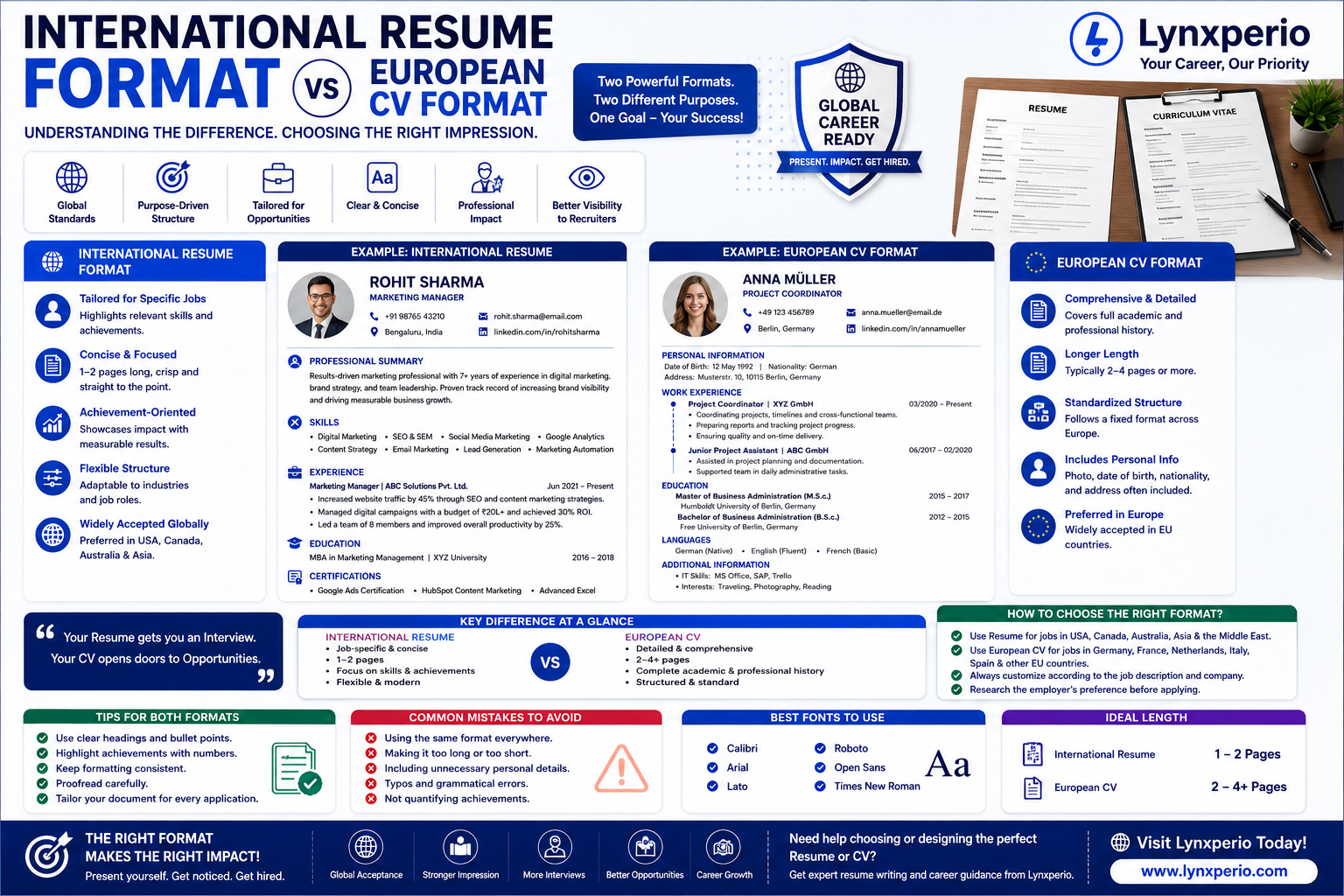
Applying for jobs abroad can be exciting, but using the wrong application format can reduce your chances of getting noticed. At Lynxperio, many job seekers ask about the International Resume Format vs European CV Format and which one employers prefer. While both documents highlight your qualifications, they differ in structure, length, and purpose. Understanding these differences can help you create a stronger application and improve your chances of landing interviews.
Whether you’re a student, fresher, or experienced professional, this guide explains everything you need to know about the International Resume Format vs European CV Format, including their key differences, when to use each one, and tips for creating an impressive application.
Why Choosing the Right Format Matters
Your resume or CV is often your first impression on an employer. Different countries have different hiring expectations, so using the correct format shows professionalism and attention to detail.
Choosing the right format can help you:
- Meet employer expectations
- Pass Applicant Tracking Systems (ATS)
- Highlight relevant skills effectively
- Improve your interview opportunities
Using the wrong format may confuse recruiters or make your application appear incomplete.
International Resume Format vs European CV Format
Understanding the International Resume Format vs European CV Format begins with knowing what each document is designed for.
What Is an International Resume?
An international resume is a concise document created for applying to jobs across countries like the United States, Canada, Australia, Singapore, and many multinational companies worldwide.
It focuses on:
- Professional experience
- Skills
- Education
- Achievements
- Certifications
Typically, it is one to two pages long and customized for each job application.
What Is a European CV?
A European CV follows a more standardized format used across many European countries.
The most common example is the Europass CV, recognized by employers and educational institutions throughout Europe.
A European CV usually includes:
- Personal information
- Education
- Work experience
- Language skills
- Digital skills
- Projects
- Certifications
- Additional information
It is generally more detailed than an international resume.
Key Differences Between International Resume Format vs European CV Format
1. Length
International Resume
Usually one page for freshers and up to two pages for experienced professionals.
European CV
Can extend to two or more pages depending on experience.
2. Personal Information
International Resume
Includes:
- Name
- Phone number
- LinkedIn profile
Avoid adding:
- Date of birth
- Marital status
- Nationality
- Photograph
European CV
Often includes:
- Date of birth
- Nationality
- Languages
- Professional photo (optional or expected in some countries)
Requirements vary by country.
3. Format
International Resume
Highly customized for each position.
Focuses on achievements and measurable results.
European CV
Follows a structured and standardized format, especially when using Europass.
4. Work Experience
International Resume
Lists accomplishments with numbers.
Example:
- Increased sales by 25%
- Reduced project costs by 15%
European CV
Provides more detailed descriptions of roles and responsibilities.
5. Skills Section
International resumes prioritize technical and job-specific skills.
European CVs often include:
- Language proficiency
- Digital competencies
- Communication skills
- Organizational abilities
When Should You Use an International Resume?
Use an international resume when applying for jobs in:
- United States
- Canada
- Australia
- New Zealand
- Singapore
- Middle East
- Global multinational companies
Recruiters generally expect concise and achievement-focused resumes.
When Should You Use a European CV?
A European CV is ideal when applying for:
- Jobs within Europe
- Universities
- Scholarships
- Research positions
- Government organizations
- Erasmus programs
Many employers specifically request a Europass CV.
International Resume Example
Professional Summary
Results-driven Software Engineer with three years of experience developing web applications using JavaScript, React, and Node.js. Proven ability to improve application performance and deliver scalable solutions.
Skills
- JavaScript
- React
- SQL
- Git
- Problem Solving
Experience
Software Developer
- Improved website speed by 35%
- Developed responsive web applications
- Collaborated with cross-functional teams
European CV Example
Personal Information
Name
Nationality
Languages
Contact Information
Education
Bachelor of Computer Science
XYZ University
Work Experience
Software Developer
ABC Technologies
Responsibilities, achievements, and projects completed.
Language Skills
English (C1)
German (B2)
Digital Skills
Microsoft Office
HTML
CSS
Python
Tips for Creating an International Resume
Keep It Short
Limit your resume to one or two pages.
Customize Every Application
Tailor your resume using keywords from the job description.
Highlight Achievements
Include measurable accomplishments whenever possible.
Use ATS-Friendly Formatting
Avoid tables, graphics, and complex layouts.
Focus on Results
Employers value impact more than responsibilities.
Tips for Creating a European CV
Follow the Europass Structure
If requested, use the official Europass format.
Include Language Skills
Many European employers value multilingual candidates.
Add Certifications
Professional training and certifications strengthen your profile.
Keep Information Organized
Use clear headings and consistent formatting.
Proofread Carefully
Avoid grammar or spelling mistakes before submitting.
Common Mistakes to Avoid
Many candidates reduce their chances of success by making these mistakes.
Using the Same Document Everywhere
Different countries expect different formats.
Including Irrelevant Information
Only include information required by the employer.
Ignoring ATS Optimization
Use relevant keywords naturally throughout your resume.
Writing Long Paragraphs
Recruiters prefer short bullet points.
Forgetting to Update Contact Details
Always double-check your email address and phone number.
How Lynxperio Helps Global Job Seekers
Preparing an application for international opportunities can feel overwhelming, especially if you’re unsure which format employers expect. Understanding regional hiring practices is an important step toward creating a successful job application.
Lynxperio offers practical resources that help candidates create professional resumes and CVs tailored to different countries and industries. Whether you’re applying for your first international role or planning a career move abroad, the platform provides useful guidance for every stage of your job search.
Students, freshers, and experienced professionals can all benefit from expert tips, formatting advice, and career-focused content available through Lynxperio. Learning how to present your qualifications effectively can make a significant difference during the hiring process.
With reliable career resources and resume-writing guidance, Lynxperio helps job seekers build confidence and prepare documents that meet global hiring standards. Many professionals rely on Lynxperio to strengthen their applications and improve their chances of securing interviews.
Frequently Asked Questions
What is the difference between International Resume Format vs European CV Format?
The main difference is that an international resume is shorter and achievement-focused, while a European CV is more detailed and often follows the standardized Europass format.
Which format is better for international jobs?
It depends on the country. Most employers outside Europe prefer an international resume, while many European employers request a European CV.
Is the Europass CV mandatory?
No. However, some universities, government organizations, and employers in Europe specifically ask for it.
How long should an international resume be?
One page for freshers and up to two pages for experienced professionals.
Can I use the same resume for every country?
No. You should always customize your application based on the country’s hiring standards and employer requirements.
Conclusion
Understanding the International Resume Format vs European CV Format is essential if you plan to apply for jobs overseas. Each format serves a different purpose, and choosing the right one can improve your chances of passing recruiter reviews and ATS screenings. By following country-specific guidelines, highlighting relevant achievements, and keeping your application well-structured, you’ll present yourself as a stronger candidate.
If you’re looking to create professional resumes, European CVs, or job-ready application documents, explore the career resources available at Lynxperio. With expert guidance, practical templates, and resume-writing tips, Lynxperio can help you prepare for global career opportunities with confidence.